Beyond the Max Win Banner: A 2026 Slot Guide to Volatility, Hit Rate, and Bonus Fine Print
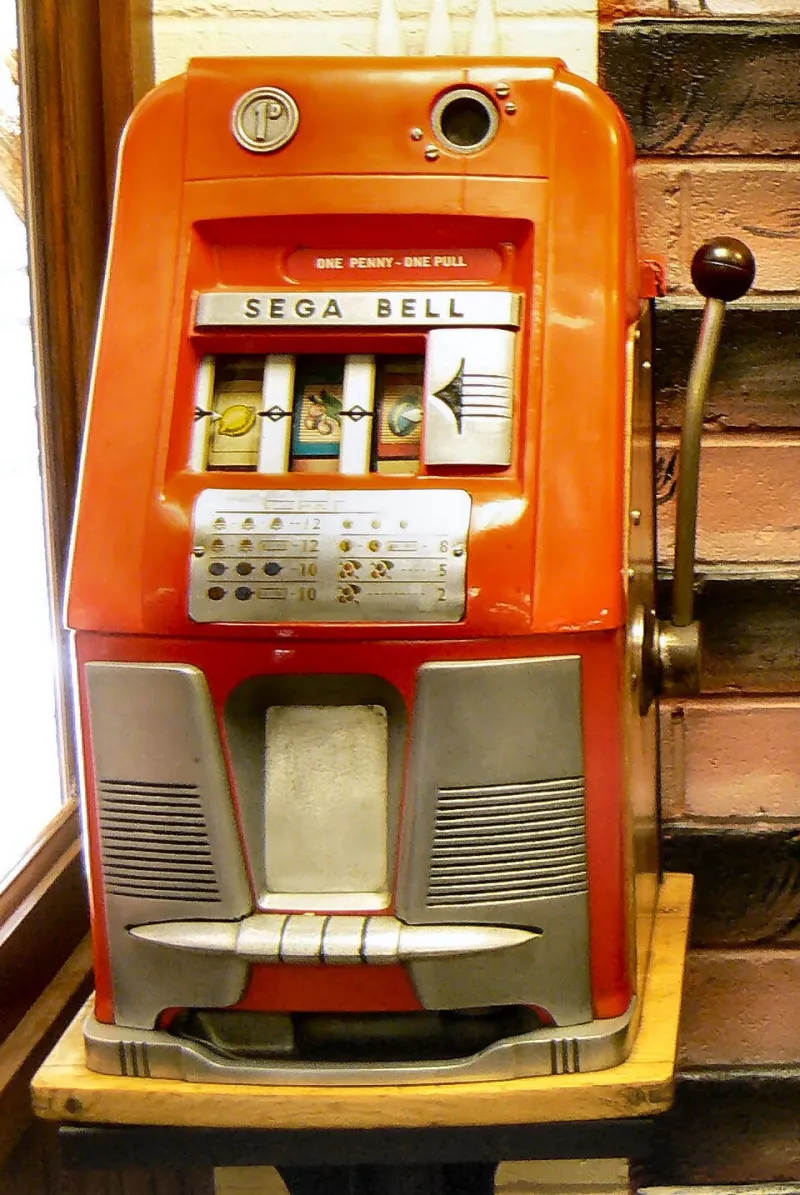
Photo: Ronald Saunders from Warrington, UK, CC BY-SA 4.0, via Wikimedia Commons
Open an online casino lobby in 2026 and the banners start shouting. One slot offers a 10,000x max win. Another promises a bonus round in every 150 spins. A third has a promo tag that makes the whole page look like a holiday gift. None of those numbers mean much until you understand how the game actually behaves.
This is not a sermon about avoiding slots. It is a guide to reading them. For US players comparing online casino lobbies, the useful information usually sits in the game rules tab, not in the promotional headline.
Volatility Is a Shape, Not a Rating
Slot volatility describes how the game distributes its payouts. Low-volatility slots tend to produce smaller, more frequent wins. High-volatility slots tend to produce longer dry spells and larger potential payouts when they hit. Medium volatility sits somewhere between the two.
That sounds simple, but volatility is better understood as a shape of the session rather than a star rating. Two games can have the same theoretical return to player, or RTP, and still feel completely different. A low-volatility game may keep your balance moving in small increments. A high-volatility game may eat through the same balance in a hurry and then deliver a large hit, or it may not deliver one before your session budget runs out.
For a casual player, volatility is a bankroll question. If you want a longer session with more frequent small returns, a high-volatility game is not the obvious choice. If you are playing for the outside chance of a big feature and you are comfortable with long gaps between meaningful wins, the higher-volatility profile may fit. Neither style is smarter. They simply require different expectations.
Hit Frequency: The Rhythm Behind the Spins
Hit frequency is the percentage of spins that return something. A 25% hit frequency roughly means one in four spins produces a return of some kind. It does not mean you profit on 25% of spins. Many of those returns will be smaller than the bet.
This is where players often mix up activity with advantage. A game with a high hit frequency can feel generous because the reels keep paying something. But if those payouts are tiny, the balance can still drift downward. A game with a lower hit frequency can feel cold, yet its less frequent wins may be larger.
Hit frequency and volatility work together. A game can have a high hit rate and low volatility, or a lower hit rate and high volatility. The rules tab may list both, and if it does not, the volatility description and the paytable can give you clues. A paytable full of small symbol pays and frequent line hits reads differently from one built around scarce bonus symbols and huge multipliers.
Why Max Win Numbers Are Not Realistic Expectations
Max win is usually a cap, not a forecast. When a slot advertises a 10,000x max win, it is saying that the game's payout rules allow a win up to 10,000 times the bet. It is not saying that the average player should expect that result, and it is not saying the game is likely to produce it in a normal session.
Some max wins require a specific combination of symbols, multipliers, feature retriggers, and bet size. Some games have a fixed payout ceiling that applies even if the screen technically shows more. Some max-win claims are tied to the maximum bet, which may be far above what a casual player uses.
Max win also says nothing about RTP. RTP is the theoretical long-run return of the game, usually expressed as a percentage. A 96% RTP game is not a 96% chance to win. It means that over a very large number of spins, the game is designed to return about $96 for every $100 wagered, with plenty of variance along the way. The max-win banner and the RTP figure are different pieces of information, and neither one guarantees a good session.
Read the Rules Tab Before the Promo Tab
If you are using a casino bonus on slots, the promo terms matter as much as the game rules. A bonus may have a wagering requirement, a maximum bet while the bonus is active, a time limit, and a list of eligible games. Some slots contribute 100% toward wagering. Others contribute 50%, 20%, or nothing at all.
Game weighting is the quiet detail that changes the math. Suppose you claim a $100 bonus with a 30x wagering requirement. That is $3,000 in qualifying wagers before the bonus converts. If a slot contributes 100%, every $1 you wager counts as $1. If it contributes 50%, every $1 counts as $0.50, so you need twice as much actual play. If the game is excluded, it may not count at all.
A simple example helps. At 96% RTP, $3,000 in wagers has an expected loss of about $120 over the long run. That does not mean you will lose exactly $120, and it does not mean the bonus is automatically bad. It means the bonus value has to be weighed against the playthrough, the max bet rule, and the chance of finishing the wagering. A large bonus with a low max bet and heavy game weighting can be less useful than a smaller bonus with cleaner terms.
A Lobby Comparison Checklist for US Players
- Check the game rules for RTP, volatility, hit frequency, and max win language.
- Treat max win as a cap, not a likely outcome.
- Compare volatility with your session budget and how long you want to play.
- Read bonus weighting before choosing a slot for a promotion.
- Note the maximum bet allowed while a bonus is active.
- Look for excluded games and expiration dates.
- Confirm the casino is licensed in your state and that online casino play is legal where you live.
- Set a loss limit before you spin, not after the balance drops.
Banners Are Footnotes, Not Instructions
Slot games are built to entertain, and the lobby is built to sell. That is not a scandal. It is just a reason to slow down and read the details that do not fit in a banner. A max-win number can be part of the fun, but it should not be the reason for a bet. Volatility, hit frequency, RTP, and bonus weighting tell a more useful story. K89Bet Live's casino guides focus on that story so US players can compare lobbies with clearer eyes and keep the session within a budget they set on purpose.